What a theater in the streets, an olive, an artists' ruin, a witch trial and a chickpea festival teach U.S. communities about cultural sustainability
What sustains a small community's cultural economy is not the asset itself. It is a committed steward who reinvests in it every year.
Most adaptive reuse conversations start with a building: a mill becomes a gallery, a bank becomes a museum. This summer, Pollen's fieldwork in the hills behind the Italian Riviera pointed to a bigger idea. In these villages the entire place is the asset: streets, squares, terraced groves, even a clearing in the woods.
We studied five communities in Liguria and the neighboring Gavi area of Piedmont. Each has found a different way to turn its historic fabric into a cultural economy. One has struggled. Their stories hold practical lessons for American small towns, Main Street districts and rural counties.
At a glance: five models of village reuse
What sustains a small community's cultural economy is not the asset itself. It is a committed steward who reinvests in it every year.
| Model | Example | How it works | What we learned |
|---|---|---|---|
| 1Partnership event | Apricale | A professional theater company has turned the village into a walking stage every August for more than 30 years. | A village can host a cultural institution without owning one. |
| 2Single-product identity | Taggia | The town is the namesake of the Taggiasca olive, which won EU protected status in 2025. | A place-named product builds year-round value once the name is protected. |
| 3Artist-led reuse | Bussana Vecchia | Artists rebuilt an earthquake ruin by hand from 1959, without ever holding title. | Pioneers create value, but without tenure and a steward it drifts to whatever pays most. |
| 4Heritage theme | Triora | Residents, shops and the town calendar all tell the story of its 16th-century witch trials. | A story lasts when the whole community co-owns it. |
| 5Community festival | Gavi area villages | Volunteer associations run food festivals that seat thousands of diners over a single weekend. | Visitor spending flows straight to a local nonprofit. |
Source: Pollen LLC Peer Benchmarking Series, 2026 fieldwork in Liguria and Piedmont, Italy. © Pollen LLC. pollenusa.com
1. Apricale: host a cultural institution without owning one
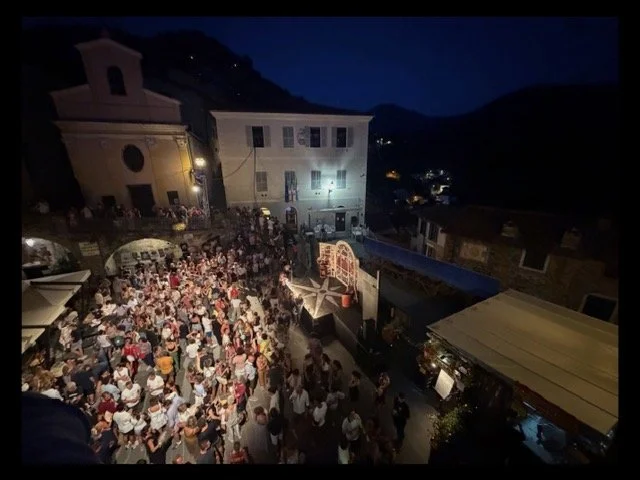
Summer night in Apricale. The village’s main square becomes a theater, and residents, visitors and local restaurants fill the stage the village never had to build.
For more than 30 years, a Genoa theater company has staged its summer production in the lanes and squares of Apricale. Audiences walk the village at night, and local restaurants serve them before the show. The village never built or staffed a theater. It built a lasting partnership instead.
Lesson: a long-term agreement with a professional producer, backed by the municipality and paid back through local businesses, can be worth more than a building.
2. Taggia: protect the name, then build on it
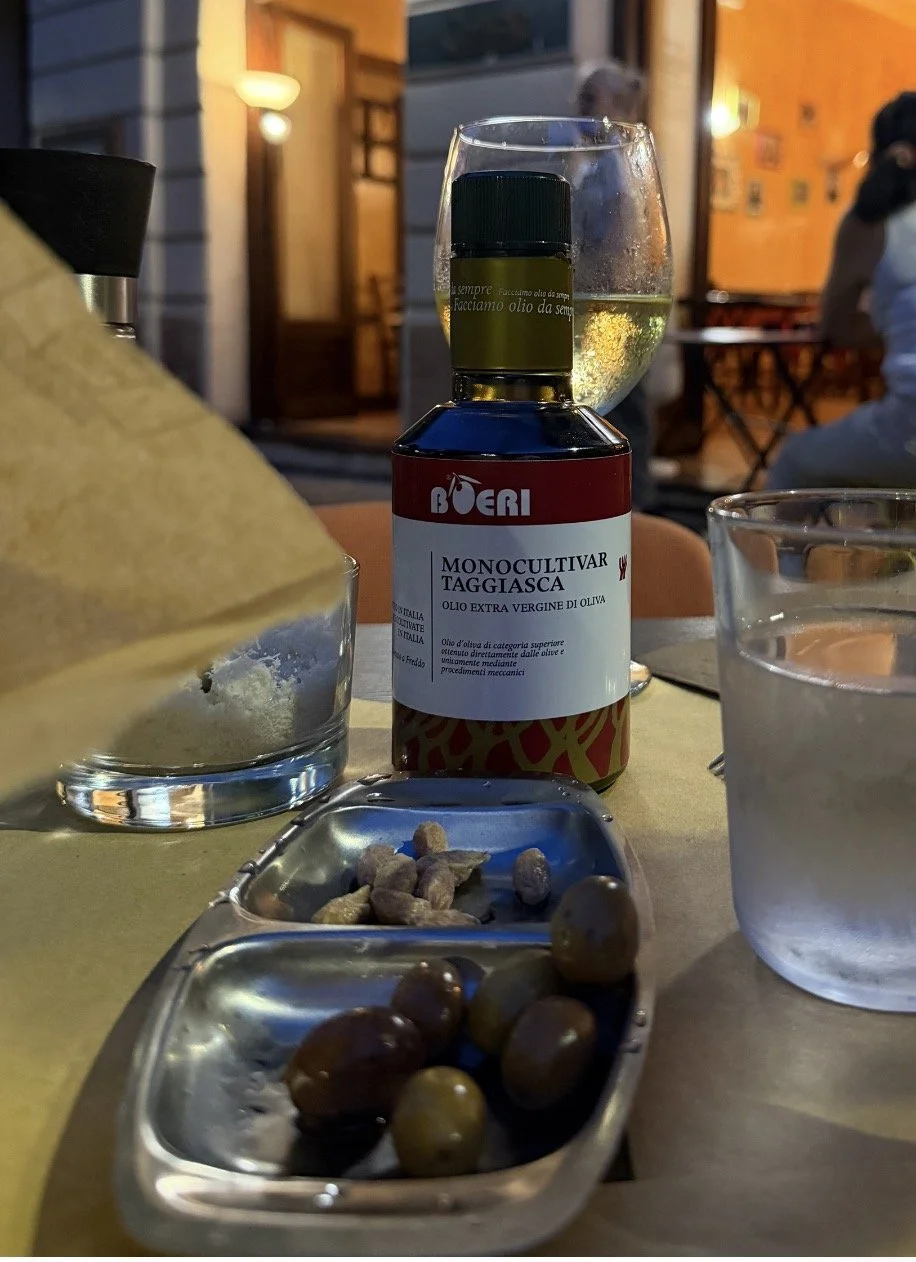
The Taggiasca olive, served where it gets its name. Since 2025 the olive carries EU protected status, and a single local product does the work of a brand.
The Taggiasca olive takes its name from Taggia. For decades the name spread worldwide while imitations multiplied. In 2025 the olive finally won EU Protected Geographical Indication status. Now the town's terraces, mills and spring olive festival all reinforce one identity that sells year-round.
Lesson: a place-named product is a durable asset, but only once it is legally protected and a producer body owns its promotion.
3. Bussana Vecchia: what happens when no one carries it forward
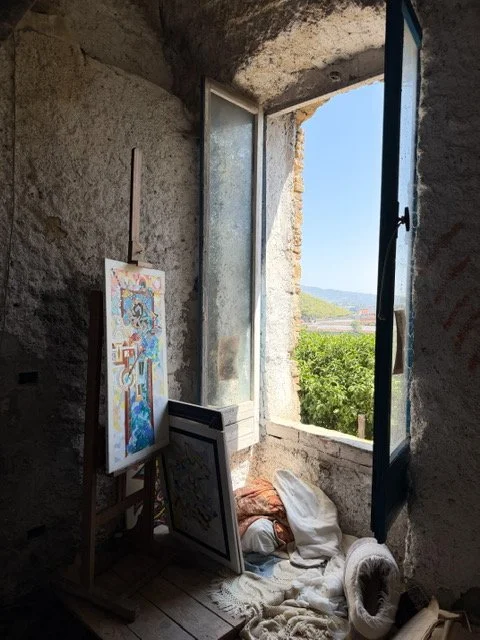
An artist’s studio in Bussana Vecchia, rebuilt by hand inside the stone shell of a village abandoned after the 1887 earthquake.
After an 1887 earthquake, Bussana Vecchia stood empty for decades. From 1959, artists rebuilt it by hand and created one of Europe's most remarkable creative communities. But they never held title, and no organization took over the investment. Decades of legal disputes followed, restoration funds went elsewhere, and today weekend bars and souvenirs increasingly fill the space the artists built.
Lesson: pioneers create value, but they cannot sustain it alone. Secure tenure and a stewardship entity need to come first.
4. Triora: when everyone tells the same story
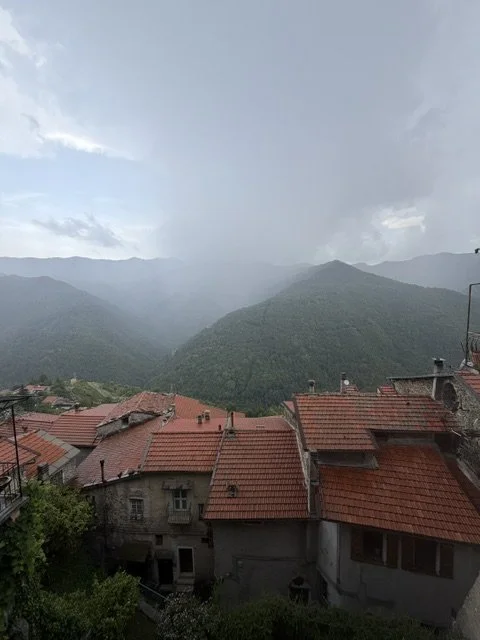
Rain moves over the Valle Argentina above the rooftops of Triora, a mountain village that tells one story, its 16th-century witch trials, through every lane and shop.
Triora is known for its witch trials of 1587 to 1589. What makes it work is not only its museum. Residents have turned the whole village into an open-air display, shops carry the theme, and festivals in August and at Halloween give the village two seasons from one story.
Lesson: a heritage theme lasts when residents and businesses co-own it, and a museum keeps it grounded in real history.
5. The Gavi area: the community as the festival
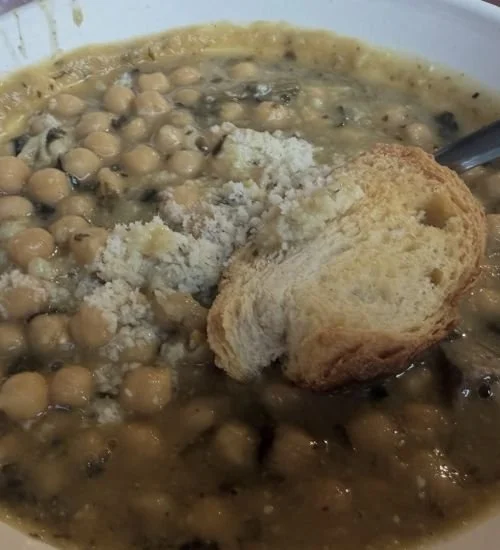
Zuppa di ceci at the Sagra di Seisi in Tramontana, now in its 36th year. A local sports club’s volunteers cook it each August in the woods, and the surplus stays with the club.
On summer weekends in the hills around Gavi, local associations turn fields and woods into open-air restaurants. Volunteers cook a signature dish (chickpea soup in one village, ravioli in beer sauce in another), local winemakers fill the glasses, and thousands of diners fill the tables until midnight. The surplus stays with the association, which by law must use it for its nonprofit purposes. Some of these festivals are in their 36th and 52nd years.
Lesson: a community can own its festival outright, and visitor spending can flow directly to a local nonprofit.
Six findings across the five cases
1. The village is the venue. None of the five depends on a museum building. The public realm itself is the experience.
2. Stewardship beats authenticity alone. The most authentic creative community in the study is also the least stable, because no organization carried its investment forward.
3. Tenure comes first. Where people could not secure title or a long-term lease, private investment stalled and public restoration funding could not be spent.
4. Every stable case has a public partner. The municipality co-owns the program in the partnership, product and heritage models.
5. Volunteers can carry a local economy. Community festivals run on donated labor and return their surplus to a local association.
6. Seasonality is the shared weakness. Most of the value concentrates in a few summer nights. The strongest cases add a second season.
Five questions for U.S. communities
Small towns, Main Street districts and rural counties face the same challenge: turning historic places into a lasting cultural economy. Before investing, a community should be able to answer five questions:
• Who is the steward, and does it have a budget, a board and a multi-year mandate?
• Who holds title or a long-term lease to the places being reused?
• How does event, product or ticket revenue flow back into upkeep?
• What happens outside the peak season?
• Is the name, product or story protected before it spreads?
These are the questions Pollen asks when we assess the financial feasibility of a cultural district, a historic downtown or a community festival. Our Financial Sustainability Framework™ and Pollen Risk Indicator™ are built to test them before a community commits its capital.
Planning a cultural or historic reuse in your community? Contact Pollen to talk about feasibility, capital strategy and long-term sustainability.